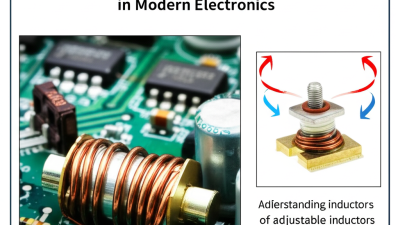
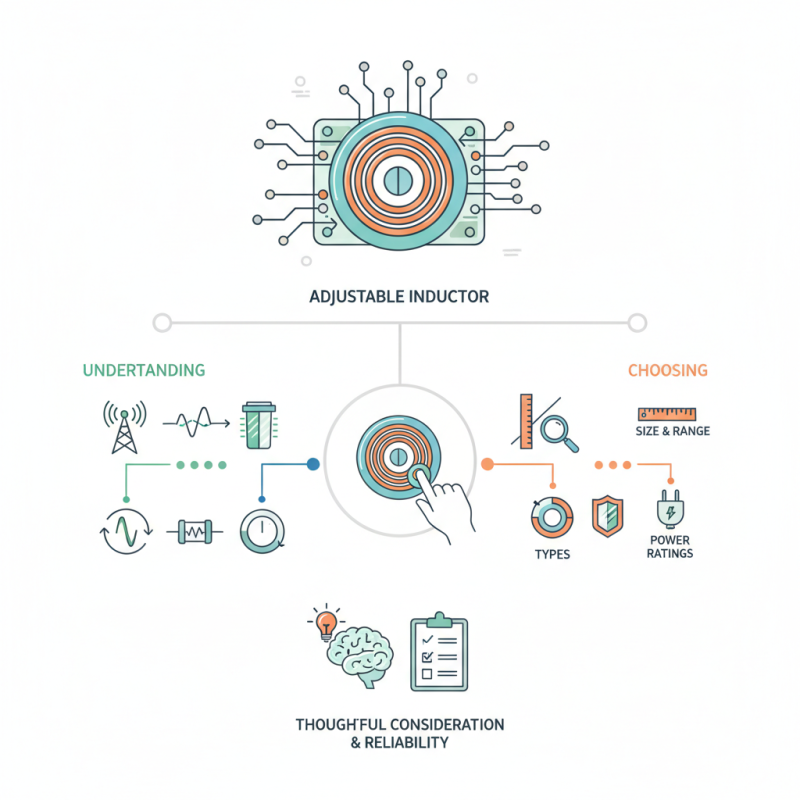
Getting to know what an Adjustable Inductoris all about is pretty important whether you're into electronics as a hobby or you're a pro. Basically, this little component lets you tweak the inductance, so it’s super versatile and handy for all sorts of projects. Whether you're working on a radio transmitter, filters, or oscillators, being able to fine-tune your circuits can really boost how well everything works. When you're picking out an Adjustable Inductor, a few things matter — like size, the range it offers, and what type it is.
Now, when you’re choosing one, think about what you actually need. There are quite a few types out there, each with their own quirks and characteristics. It pays to understand what suits your project best — trust me, it makes your life so much easier in the long run. That said, sometimes folks overlook the power ratings or pick an inductor that just doesn’t quite fit their needs, which can be frustrating.
Getting it right really can make a difference in your device’s performance, but it’s important to put some thought into your choice. It’s easy to rush through this part — I’ve definitely been guilty of that — but that can lead to issues later on. Looking back at mistakes can teach you a lot about what to do differently next time. All in all, an Adjustable Inductor is a pretty powerful tool — if you pick the right one, it can really make your projects shine.
What is an Adjustable Inductor? Definition and Basic Principles
An Adjustable Inductor is a vital component in many electronic circuits. It allows users to modify inductance values easily, impacting circuit performance. Understanding its basic principles is essential for effective use. At its core, an Adjustable Inductor comprises a coil and a movable core. This design enables the inductance to change based on the core's position. As the core is adjusted, the magnetic flux also varies, directly influencing the inductive properties.
When selecting an Adjustable Inductor, consider several factors. The required inductance range is crucial. You should also examine the quality of the coil and core materials.Low DC resistance rod choke inductors can provide efficient performance. However, the choice depends on your specific application, including frequency response and current handling.
It's important to remember that not all Adjustable Inductors are created equal. Some may have limitations in their tuning range. This can lead to dissatisfaction if the circuit requires precise control. Users should reflect on their circuit design needs carefully. Evaluating potential drawbacks will help in making an informed decision. The balance between flexibility and performance is vital in choosing the right component.
What is an Adjustable Inductor and How to Choose One?
| Feature | Description | Application | Selection Tips |
| Type | Variable inductance allows for tuning | Used in RF circuits | Consider application frequency |
| Inductance Range | Values can be adjusted from a few microhenries to several henries | Filters, oscillators, and impedance matching | Choose based on circuit requirements |
| Form Factor | DIP, SMD, or toroidal styles | Compact designs, various layouts | Match size to PCB layout |
| Adjustment Mechanism | Manual screw, electronic tuning, or software control | Dynamic applications needing fine-tuning | Consider ease of access and adjustment frequency |
| Material | Ferrite, air core, or iron core options | Power handling and efficiency | Base selection on loss and saturation |
Types of Adjustable Inductors: Exploring Key Variants and Their Uses
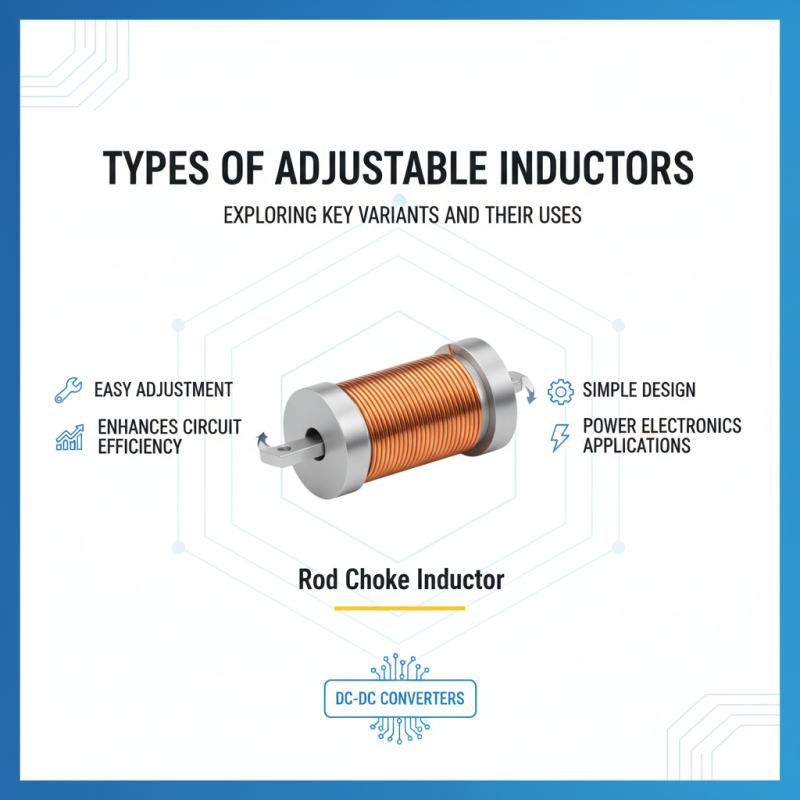
When exploring Adjustable Inductors, it's essential to recognize the various types available. TheRod choke inductor for DC-DC converters is a popular choice. This type allows for easy adjustments to inductance values, enhancing circuit efficiency. Its simple design makes it suitable for a range of applications, especially in power electronics.
Ferrite-Core Inductors are another key variant. They often provide better performance at high frequencies. Adjusting their inductance is crucial for tuning circuits and optimizing signal integrity. A less common choice could be air-Core Inductors, which offer low losses in specific applications. Their adjustable nature allows for fine-tuning, but they may lack some performance features in more demanding environments.
In practical applications, users might struggle with selecting the right inductor type. It’s not just about adjusting values. Consider heat dissipation, size constraints, and intended frequency ranges. Fine-tuning an inductor can be an iterative process, requiring experimentation and adjustment. Being aware of these factors can greatly improve design outcomes and component interactions.
Applications of Adjustable Inductors in Modern Electronics and Engineering
Adjustable Inductors play a vital role in modern electronics and engineering. These components allow for variable inductance, enabling fine-tuning in circuits. In applications like radio frequency (RF) tuning, Adjustable Inductors help achieve optimal signal reception. They are essential in creating adjustable filters and oscillators, enhancing communication systems.
In power management, Adjustable Inductors are used to manage energy flow. They can respond to loads dynamically, providing stability in converter circuits.Engineers often face challenges when selecting the right adjustable inductor. It's crucial to consider the application, frequency range, and current ratings. An inductor's Q factor also matters; a higher Q means better efficiency.
While adjustable inductors offer flexibility, they can introduce complexity. Designing a circuit with these components requires attention to detail. Miscalculations or poor matching might lead to performance issues. Experimentation is often necessary to find the ideal configuration. Balancing performance with practical constraints can be challenging but rewarding.
Key Factors to Consider When Choosing an Adjustable Inductor
When choosing an adjustable inductor, consider several key factors. The first is inductance range. A wide range allows flexibility in tuning your circuits. Different applications may require different inductance levels. For RF applications, precise control is vital. Check the specifications carefully to ensure it fits your needs.
Next, look at the quality factor (Q factor). A higher Q translates to lower energy losses. This is especially important in high-frequency applications. Measure performance across various frequencies to ensure reliability. Monitor how the inductor performs under different conditions.
Thermal stability is another aspect to analyze. Inductors can heat up during operation. Excessive heat can cause performance drops. Check how the inductor reacts to temperature changes. Each inductor may behave differently. Some may need additional cooling, while others manage heat well.
Understanding Adjustable Inductor Ratings: Inductance, Current, and Voltage
Adjustable inductors play a vital role in various electronic applications. To choose the right one, it’s crucial to understand their ratings. The three main specifications to consider are inductance, current, and voltage. Inductance is the ability of the inductor to store energy in a magnetic field. This value should match your circuit's requirements. If the chosen inductance is too high or too low, it can lead to inefficient circuit performance.
Current rating is equally important. It indicates the maximum current the inductor can carry without overheating. Exceeding this limit can cause damage. Voltage rating shows the maximum voltage the inductor can withstand. Ignoring these ratings may result in component failure or altered functionality.
Many users struggle with selecting the appropriate specifications. They often underestimate the impact of an adjustable inductor's ratings. This may lead to trial-and-error approaches, which can be costly in both time and resources. Balancing these ratings requires careful consideration. Sometimes, it is beneficial to consult with an expert or refer to technical documents for guidance.
Understanding Adjustable Inductor Ratings
The above bar chart illustrates the ratings of adjustable inductors, showcasing three important parameters: Inductance (in milliHenries), Maximum Current (in Amperes), and Maximum Voltage (in Volts). This information is crucial for selecting the appropriate adjustable inductor for various applications.
Best Practices for Integrating Adjustable Inductors into Circuit Designs
Integrating adjustable inductors into circuit designs can be complex. Understanding their characteristics is essential. These components allow for tuning of inductance values, which can be beneficial in various applications. However, selecting the right type requires careful consideration. Factors like the core material, size, and intended application play a significant role in performance.
When choosing an adjustable inductor, consider the use of a Ferrite rod choke inductor. This type of inductor offers stability and efficiency. Its design helps minimize losses and ensures reliable operation. It's important to examine the desired inductance range carefully. A misstep here could lead to inefficient circuit performance, potentially causing issues in functionality.
Real-world applications often reveal challenges during integration. For instance, not all wiring configurations work seamlessly with adjustable inductors. This can lead to unexpected signal behavior or interference. Prototyping can help identify these pitfalls early. Additionally, pay attention to environmental factors, such as temperature changes, that might affect inductance. By being mindful of these details, designers can enhance performance and reliability in their circuits.
Recent Innovations and Trends in Adjustable Inductor Technology
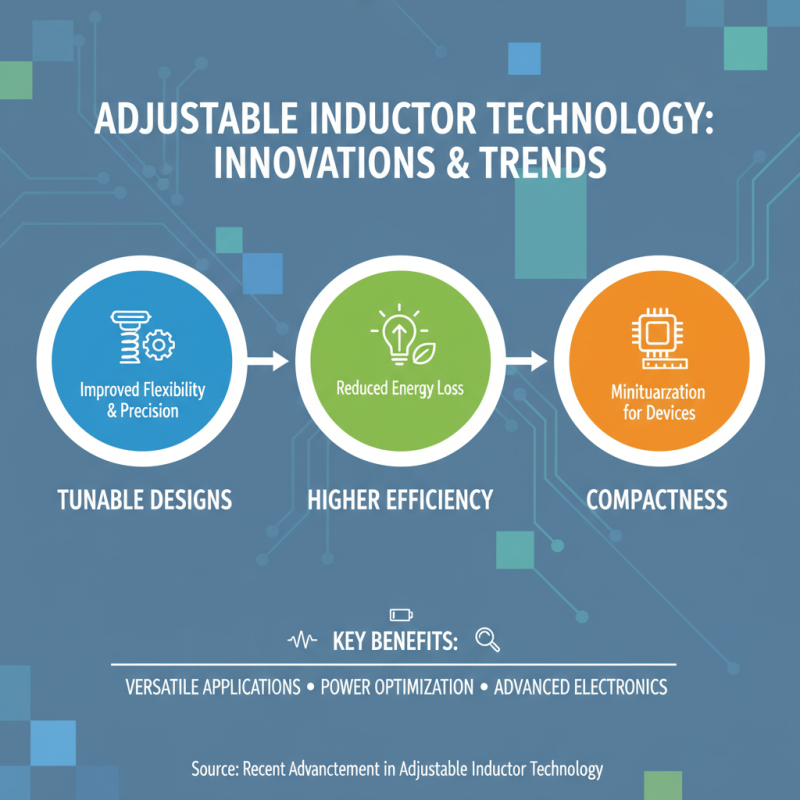
Recent advancements in adjustable inductor technology are reshaping various electronic applications. One significant trend is the development of improved tunable designs. Engineers strive for higher efficiency and compactness. These innovations allow for flexible tuning capabilities, catering to various circuit requirements.
Additionally, a focus on materials enhances performance. Lightweight materials lead to reduced losses. This is crucial in portable devices, where every ounce matters. Some designs incorporate a Rod Choke Inductor. This innovation provides stable inductance while allowing for easy adjustments.
However, challenges persist in balancing quality and cost. As manufacturers push for more advanced features, prices can rise. Buyers often find themselves weighing benefits against budgets. There’s a continuous need for reflection on these trade-offs. Proper assessment of specifications and intended use is essential for making informed choices. Understanding the latest trends can guide users toward the most effective solutions.
Maximizing Energy Efficiency with ECD42 Series Molding Power Inductors: A Comprehensive Guide
In today's technology-driven landscape, maximizing energy efficiency is crucial for the performance of electronic devices. The ECD42 series molding power inductors are particularly noteworthy for their potential to enhance energy efficiency across various applications. These inductors are designed with a low profile and low direct current resistance (DCR), which contribute to improved power efficiency, allowing systems to operate with greater reliability under varying loads.
Operating effectively in a frequency range of up to 5MHz, the ECD42 series inductors showcase a magnetically shielded construction that minimizes electromagnetic interference (EMI). This feature is essential in environments where maintaining signal integrity is paramount, particularly in sensitive applications like DC to DC converters for CPUs and VRMs in servers. The inductors also boast a high current carrying capacity while maintaining low core loss, factors that are critical in achieving the desired performance and longevity in electronic circuits.
Moreover, the ECD42 inductors are compliant with environmental standards such as Halogen Free and ROHS, making them a robust choice for modern electronics where sustainability is a concern. Their operating temperature range of -55℃ to +125℃ ensures that they can function flawlessly in diverse environmental conditions, further promoting energy efficiency in devices like switching power supplies and SSD modules. The ability to deliver stable power while adhering to stringent environmental regulations makes these inductors an invaluable asset in optimizing energy use in contemporary electronic applications.
FAQS
: Adjustable inductors are components that allow variable inductance settings in electronic circuits. They enable fine-tuning for better performance.
Rod choke inductors are easy to adjust and improve circuit efficiency. Their simple design suits various power electronic applications.
Ferrite-core inductors excel at high frequencies. Adjusting their inductance is important for tuning and optimizing signal integrity.
Air-core inductors are less common. They offer low losses but may not perform well in demanding environments.
Users often struggle with selecting the proper inductor type. Heat dissipation and size constraints are critical considerations.
They manage energy flow and respond dynamically to loads, ensuring stability in converter circuits.
Consideration of application, frequency range, and current ratings are vital in making a suitable choice.
A higher Q factor indicates better efficiency, which is important for optimal circuit performance.
While they offer flexibility, they can complicate circuit design. Miscalculations may lead to performance issues.
Experimentation and attention to detail are often required to balance performance with practical constraints.
Conclusion
An adjustable inductor is a versatile electronic component that allows for the modification of inductance values, making it crucial in various applications within modern electronics and engineering. These inductors come in different types, each suited for specific uses ranging from tuning radio frequencies to managing power supplies. When selecting an adjustable inductor, key factors such as inductance range, current handling, and voltage ratings should be considered to ensure compatibility with circuit designs.
Integrating adjustable inductors into circuit designs requires a solid understanding of their specifications and operational principles. Best practices include ensuring proper placement within the circuit and accounting for the inductor's influence on overall performance. Moreover, recent innovations in adjustable inductor technology continue to enhance their functionality, leading to improved efficiency and adaptability in electronic systems.

 +86-15916242887
 CONTACT US